
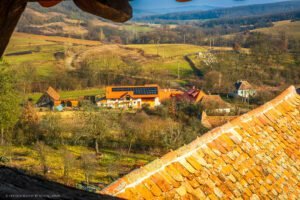
Hello and welcome to the first post on The Earthway Chronicles! We’re so glad you’re here, whether you’re a seasoned homesteader, an aspiring eco-conscious practitioner, or simply curious about what sustainable living looks like on the ground. Through these posts, I’ll be sharing the "what," "why," and "how" of our journey to build The Earthway—a sustainable, community-centered sanctuary in Șomartin, a small village nestled in the heart of Transylvania, Romania.
At The Earthway, we believe in crafting a life that’s in harmony with the natural world, drawing from timeless wisdom and modern environmental science alike. Our project aims to blend these elements, and we invite you to follow along, learn, and even join us in rethinking what it means to live sustainably and mindfully.
The Earthway Vision: Creating a Sustainable, Nature-Connected Way of Life
The Earthway project began with a vision that grew from a deep connection to nature and a respect for traditional ecological knowledge. This vision is shaped by years of study in naturalism, permaculture, and ecopsychology, as well as my time learning from a Lakota elder. Each experience reinforced the belief that caring for the land means caring for all living beings, now and for generations to come. Rooted in the Native American principle of thinking ahead “Seven Generations,” The Earthway seeks to create a model for resilience, balance, and community cooperation.
Our work combines principles from Zen philosophy and Indigenous wisdom with sustainable farming practices like permaculture and homesteading. Every step is about integration: balancing our needs with those of the earth, using resources wisely, and taking time to build meaningful community connections. These principles guide our hands-on practices, from renovating historical buildings with locally sourced materials to implementing permaculture zoning to maximize the yield and health of our gardens. It’s a holistic, practical, and intentional approach to sustainability that we hope will inspire others on their journey toward a more interconnected way of life.
Our Current Work: Purpose-Driven Renovations and Building Community Spaces
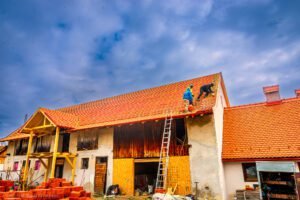
Right now, our primary focus is the renovation of our historic barn, house, and a nearby structure we call “The Ruin.” These buildings are over 400 years old, crafted with local brick, stone, and an architectural style that reflects centuries-old Saxon craftsmanship. Restoring these structures to preserve their history is important to us, but so is making them functional for modern needs in a way that respects the environment.
Restoring the Barn
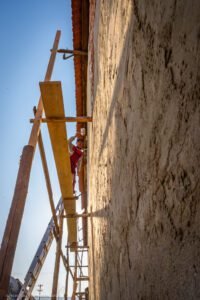
The barn is set to be the heart of our production activities. Over the last two years, we’ve worked with local artisans to carefully restore its walls using a durable lime-mud plaster, a traditional material that breathes and prevents dampness, unlike modern concrete. The north end of the barn will be home to a microbrewery where we’ll craft small batches of beer using local ingredients, alongside facilities for cheese and butter production and a distillery for apple and plum brandy. By creating these goods onsite, we’re able to preserve and celebrate regional flavors while reducing reliance on imported products.
Further south in the barn, we’re planning to modify our existing tool room to serve dual purposes: it will store tools for our homesteading activities and house a walk-in cooler for kegs, cheese, butter, and fresh produce. Another section of the barn is designated for animal care, with separate stalls for chickens and pigs. In an area like ours, caring for animals is part of a sustainable cycle—they contribute to soil health, pest control, and provide eggs, meat, and manure for our gardens.
 The Original Ruin
The Ruin: A Future Summer Kitchen and Communal Space
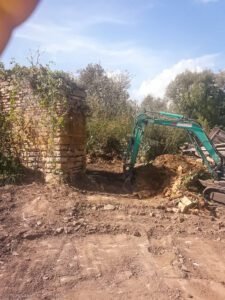
In the courtyard, we’ve also begun work on “The Ruin,” an open structure that will serve as a summer kitchen and a communal space. Here, we’ll install a traditional wood-fired pizza oven and a large bake oven, making it a gathering point where villagers and visitors alike can come to bake bread, share stories, and build community. This blend of practical function and cultural tradition is what The Earthway is all about: creating spaces that meet human needs sustainably while fostering a sense of belonging.
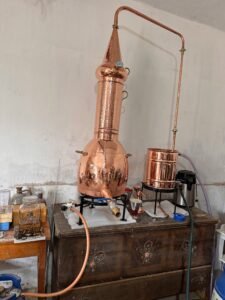
Homesteading as a Way of Life: Canning, Soap-Making, Brewing, and More
Homesteading is at the heart of our everyday practices. In a world where convenience often overshadows connection, homesteading helps us slow down, become more self-sufficient, and connect deeply to the land. Every week, we’re hands-on with activities like canning our produce, making natural soaps, brewing small-batch beer, and distilling brandy from apples and pears. These aren’t just hobbies—they’re ways to close the loop on waste, preserve local resources, and embrace time-honored skills.
For example, our soap-making process uses natural, locally sourced ingredients. It’s free from harsh chemicals, safe for the environment, and gentle on our skin. When we can fruits and vegetables, we’re extending the growing season and ensuring that none of our harvest goes to waste. And through cheese- and butter-making, we’re able to enjoy fresh, homemade dairy products that reflect the richness of the land.
Each of these practices brings a sense of fulfillment and self-reliance that deepens our relationship with the earth. It’s about seeing the resources around us as gifts and using them responsibly to create a life that’s as nourishing to us as it is to the environment.
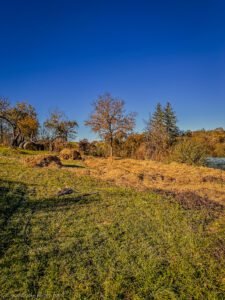
The Permaculture Landscape: Designing with Nature
Our land is organized into permaculture zones, designed to work in harmony with the natural world. Around our home and barn (Zone 0) are herb gardens, berry patches, and flowers that attract pollinators and provide fresh ingredients for daily meals. This zone is the heart of our homestead, a place we visit and work in daily.
In Zone 1, we have a kitchen garden with easy access to frequently harvested crops like lettuce, radishes, and herbs. As we move outward into Zone 2, we encounter the chicken coop, compost bins, and our beehives. The bees pollinate our crops, and the compost bins return nutrients to the soil, completing a sustainable cycle.
Further out in Zone 3, we’re planting orchards and experimenting with grains. Zone 4 will be dedicated to firewood and lumber trees to reduce our reliance on external resources, and Zone 5 will remain an undisturbed area where we can forage and observe wildlife. Each zone builds on the last, creating an interconnected landscape that sustains itself and provides for us.
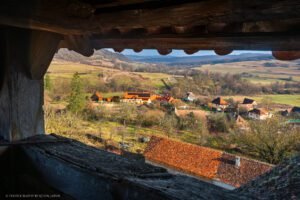
The Future Vision: A “Zen-Type” Monastery of Mindfulness and Resilience
In time, we envision The Earthway as more than a homestead—it will be a space for mindful living, community learning, and ecological restoration. Drawing inspiration from Zen philosophy, we want to create a “Zen-type monastery,” a place where people come to practice mindfulness, learn sustainable skills, and reconnect with nature. The teachings of Alan Watts and the interconnected wisdom of ecopsychology inspire us to live intentionally, to see each task—from planting seeds to baking bread—as a form of meditation and care.
This vision includes not just ecological sustainability but also community resilience. We want The Earthway to be a model of village life, where resources are shared, cooperation is prioritized, and local culture is celebrated. As Mohawk elder Jake Swamp once said, it may take 100 years to restore true community, but by building spaces like The Earthway, perhaps we can speed that process along.
Our blog will be a place to document this journey, sharing updates, insights, and reflections on sustainable living. We hope that each post will serve as a small seed, inspiring others to reconnect with nature, build resilience, and care for the Earth.
Thank you for being here as we embark on this journey, and stay tuned as we explore what it truly means to live in harmony with nature.